
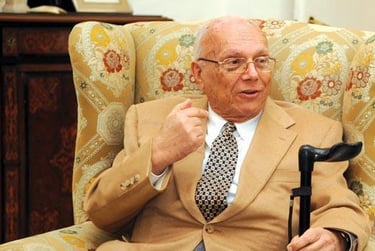
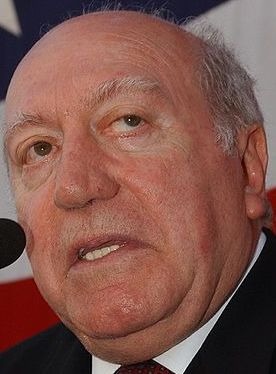
The original Executors, appointed by Mabel Strickland, (needed because of the absence of Robert who was forced to live overseas) were Prof Guido de Marco and Prof Joe Ganado.
Under Maltese law the heir, immediately, becomes the owner of all the deceased assets. Yet, at the same time, he also inherits a duty to pass on all valid and quantifiable legacies, pay off any debts of the deceased and any taxes due on the estate; the Executors are tasked with ensuring that the heir fulfils these obligations. Instead the executors, without ever consulting the heir, put the main legatee in possession of assets - to which they were not entitled - at the expense of the heir.
Executors
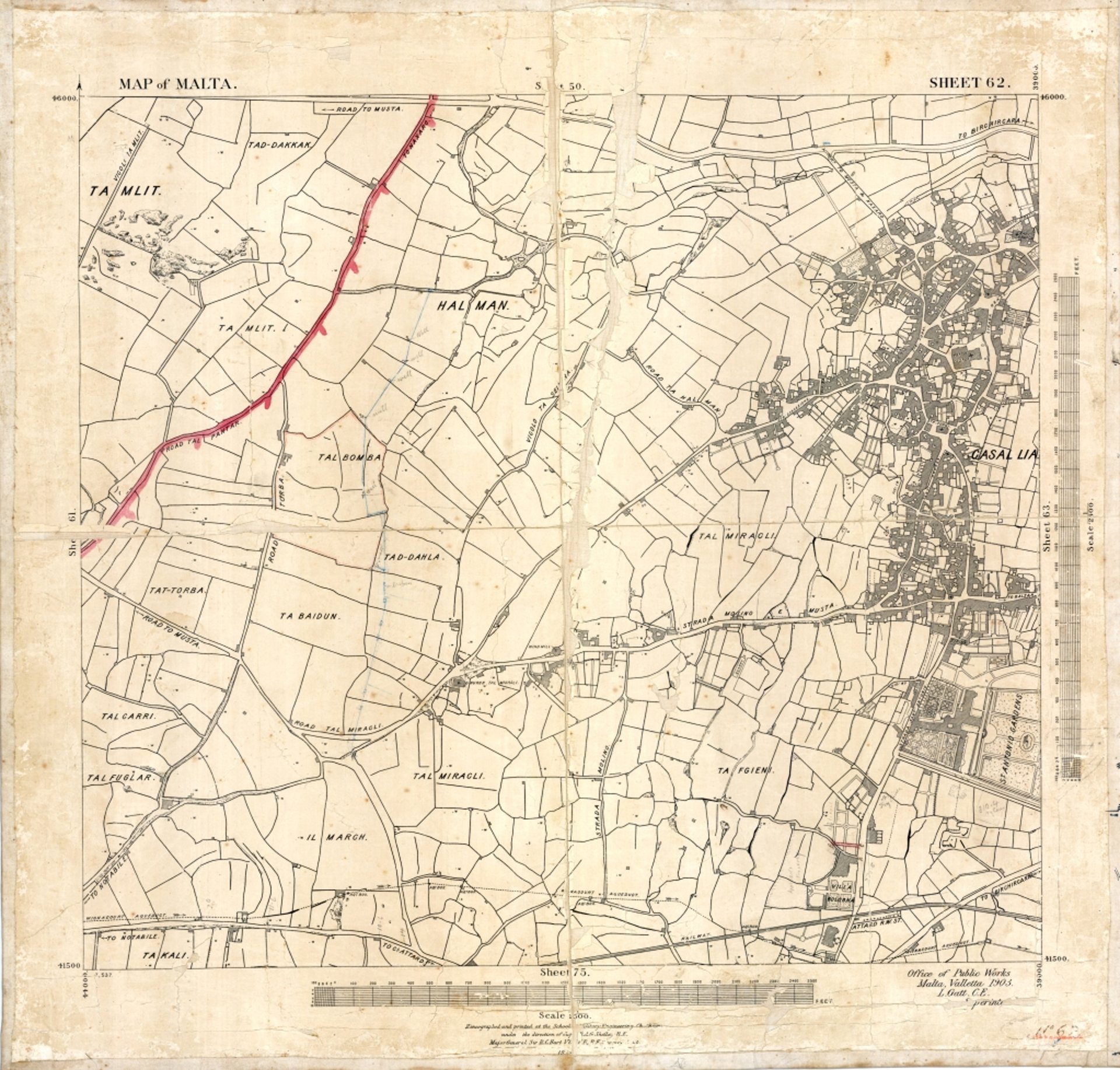
The Strickland Foundation was bequeathed Mabel’s two key assets - her property known as Villa Parisio and part of her majority shareholding in her newspaper group.
Before any estate can be properly distributed, there is process of estate settlement, designed to accomplish four things:
1. Determine what assets were owned by the deceased.
2. Place a value on the assets and produce an inventory.
3. Ensure that the heir transfers any valid and quantifiable bequests to the legatees named in the Will and ensure that the heir pays off any debts of the deceased and taxes due on her estate before he can enjoy his inheritances
4. Process should be done on a timely basis and in a ‘bonus paterfamilias’ manner. Executors have a fiduciary duty to protect the assets in the estate during the period of their administration and to properly account for all of it to the courts, (if required), and to the heir. They must ensure that the distribution of the deceased estate is made fairly and again on a timely basis.
Note: - Where there is any ambiguity in a legacy, as has arisen with Mabel's final Will, then it is normal for any executors and heir to check against any other contemporaneous correspondence or evidence that might help to clarify the testator's wishes at the time the Will was drafted. In this case, this was never done.
Professors Guido de Marco and Joseph Ganado were the original executors confirmed by Courts in 1994 to administer Mabel Strickland's estate. The dispute, with the Executors, has centred on the delineation of the property known as Villa Parisio, the contents of the Villa, Mabel’s personal property and other assets, the rights the heir has in relation to living at the Villa and the extent and validity of the bequest of shares in Allied Newspapers Ltd. to the Strickland Foundation.
Their executorship lasted for over 20 years but they failed, in all that time, to achieve a settlement of the estate and they have now died. Their failure, Robert contends, was due to their conflict of interest from the outset, their refusal to consult with him as heir, on any important matter and their extraordinary interpretation of the will of the deceased. In April 2016 Robert Strickland, the heir (being the only person eligible to be the new executor) was duly appointed by the Court to fulfil any remaining duties required of the executorship.
Part of Robert's duties are to check the accuracy of the accounts, submitted by the original Executors, and prepare a report on their veracity for the Courts; he then must state whether he accepts that their work has been properly done. Robert is unable to prepare this report as Max Ganado is refusing to pass over all the original Executors' files, as instructed by the Voluntary Court; to date, he has only passed over photocopies of some carefully selected documents and then only after a delay of several years. In addition, the de Marco family are refusing to pass over Mabel's legal and administrative files, covering the drafting of the revised 1979 will and the setting up of the Strickland Foundation which, apart from belonging to Robert by law are required, by him, to clarify the interpretation of the Will and its legacies.
In refusing to hand over to Robert (or to the Courts), Mabel's legal files or the Executor's files (currently in the possession of the sons of the deceased original Executors) Mario de Marco and Max Ganado appear to be deliberately disempowering the courts from making decisions about this situation – with vital reference to of all the background correspondence relating to the testator’s thinking, at that time, and the administration of the estate post her death.
Normal practice, internationally, is for full disclosure of all relevant documents at the start of any court case. No disclosure had been allowed of these important documents in Robert's cases, and obviously, this procedure could have prevented much court time being wasted and helped to provide real clarity.
The background to the allegations made by Robert in his court cases, are that the Executors both had a massive conflict of interest, from the outset, since they represented both the heir of the estate (as executors) and also the main legatee (as council members of the Strickland Foundation). The estate was effectively divided between the two parties but by refusing to allow Mabel’s heir onto the Council of the Strickland Foundation (set up by Mabel for “herself and her heirs in perpetuity”) they had control of the Foundation at the expense of Mabel’s heir.
Mabel intentions to safeguard her estate, for her sole heir, have been ignored and the most brazen example of this was in 2009 when the Executors saw elected their own two sons onto the Foundation instead of the heir. Furthermore, the majority shareholding of the Allied Newspaper group, on Mabel’s death, was immediately registered in the Executors’ personal names "on behalf of the estate of Mabel Strickland" and this remained the case for 22 years. In this manner, these two people effectively controlled the income of the Foundation, and with it the majority shareholding in Allied Newspapers and Mabel’s home, Villa Parisio, which only Robert was entitled to live in. This is hardly acting in a “bonus paterfamilias manner” as they were required to do.
The executors also made it their life long business to block any application Robert made to join the board of Directors of his Aunt’s erstwhile company. Indeed, shortly before Mabel died (but when she was too ill to make decisions for herself) the family insisted on the appointment of another family director. Guido de Marco (as her legal adviser) refused to accept Robert but insisted that Robert’s brother, Henry, be chosen to join the Board instead despite Robert being the heir and a qualified chartered accountant with lots of Board experience whilst Henry, at that time, had no Board experience whatsoever. Henry was supported also by Lady Monckton who, as a very minor shareholder, had previously regarded herself as Mabel’s heir, quite erroneously, but Guido well knew that Lady Monckton would never accept Robert and therefore insisted on family unanimity if any family director was to be appointed at all.
Despite the ongoing litigation Robert is currently registered as the second largest shareholder in the group, and,as such, has a legitimate expectation to be a Director of the company which has been denied him regardless of Mabel's known wishes.
In summary, therefore, the original Executors inter-meddled with the estate from the very beginning and, unilaterally, put the Strickland Foundation in possession of the key assets without ever discussing or agreeing the validity or limitations of the two key bequests with Robert.