The Facts
Allied Newspaper Ltd and Mabel Strickland's Legacy
Introduction:
The Strickland family have a long association with Malta, dating back to 1858, when Captain Walter Strickland, a naval officer from an old British, aristocratic, catholic family, married a Maltese lady, Donna Louisa Bonici, heir to Sir Nicholas Sceberras Bologna, and set up a home on the island.
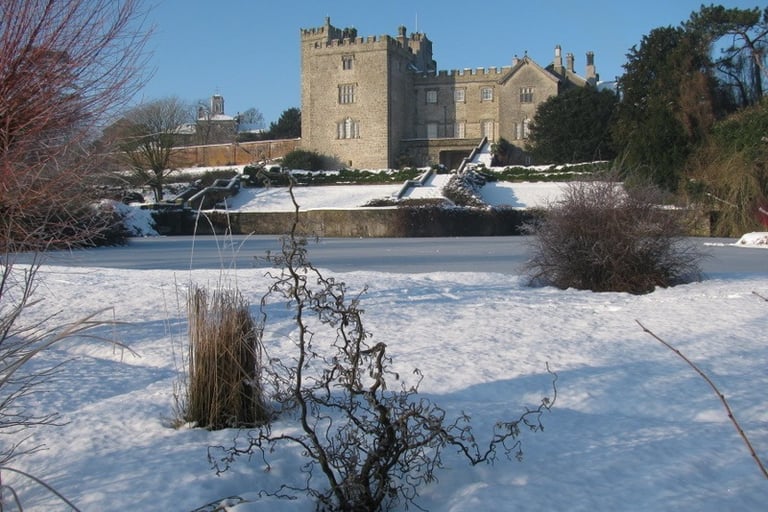
Their son Gerald Strickland, who later became Sir Gerald and then Lord Strickland, was born in Valletta, Malta, in 1861 and went on to become both an MP for Lancaster in the UK as well as an MP and, later, Prime Minister of Malta from 1927-32. He had earlier had a diplomatic career as a colonial governor in the Leeward Islands (1902-04) and in Australia (1904-1918). Lord Strickland maintained a home in the UK (Sizergh Castle, in Cumbria) as well as his family home in Malta (Villa Bologna, in Attard).
Lord Strickland and his first wife, Lady Edeline Sackville-West, had six daughters and two sons, but he lost three of their children (including both boys) in infancy, as well as his first wife, on her return to Malta in 1918, leaving him with five unmarried daughters. In 1926, Lord Strickland took as his second wife Margaret Hulton, whose family had substantial newspaper and charitable interests in the UK.
The Stricklands founded St Edwards College, the best-known public school in Malta, and also established a number of hotels on the island, including the Phoenicia Hotel, which remains one of the leading hotels in the Mediterranean, and the Xara Palace Hotel. Lord Strickland, his wife and his third daughter, Mabel, also founded Allied Newspapers Ltd in 1935 to develop his existing local newspaper interests. Allied publishes Malta’s leading English language newspapers, the Times of Malta and The Sunday Times of Malta, and contract prints many other papers.
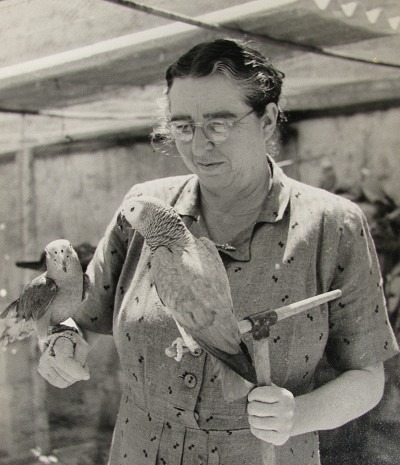
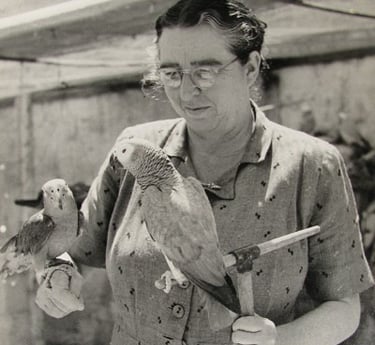
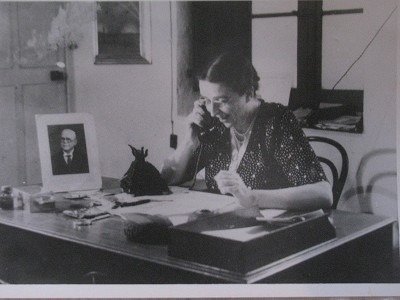
Mabel Strickland started her professional life as Lord Strickland’s assistant before becoming a newspaper editor and, later, its proprietor, as well as a successful businesswoman and politician. She was the first female leader of a political party in Malta and contributed immensely to the island’s cultural, political and economic life. Mabel died in 1988 at the age of 89. She never married, or had children of her own, but was very close to her great-nephew, Robert Hornyold-Strickland, and named him as her sole and universal heir in each Will she drew up from 1975 onwards, and this has been recognised by the Maltese Courts.
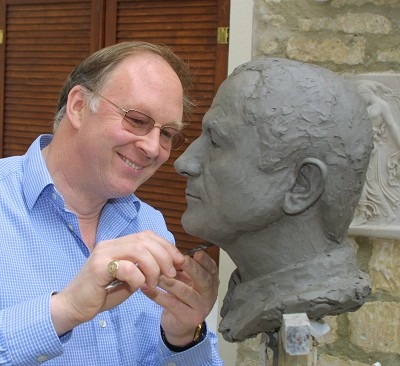
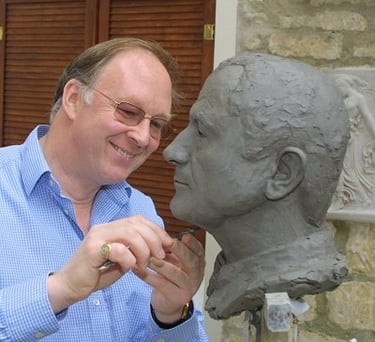
Robert Hornyold-Strickland is both a British citizen and, since 2013, also a Maltese citizen. Robert lived with Mabel in Malta in the 1970s, before being prevented from returning to the island by the Mintoff Government. Robert remained in the UK for nine years before a change of Government in Malta allowed him to start revisiting Malta on a regular basis. In 2009, Robert and his wife Dee once again settled full time in Malta in Mabel’s home.
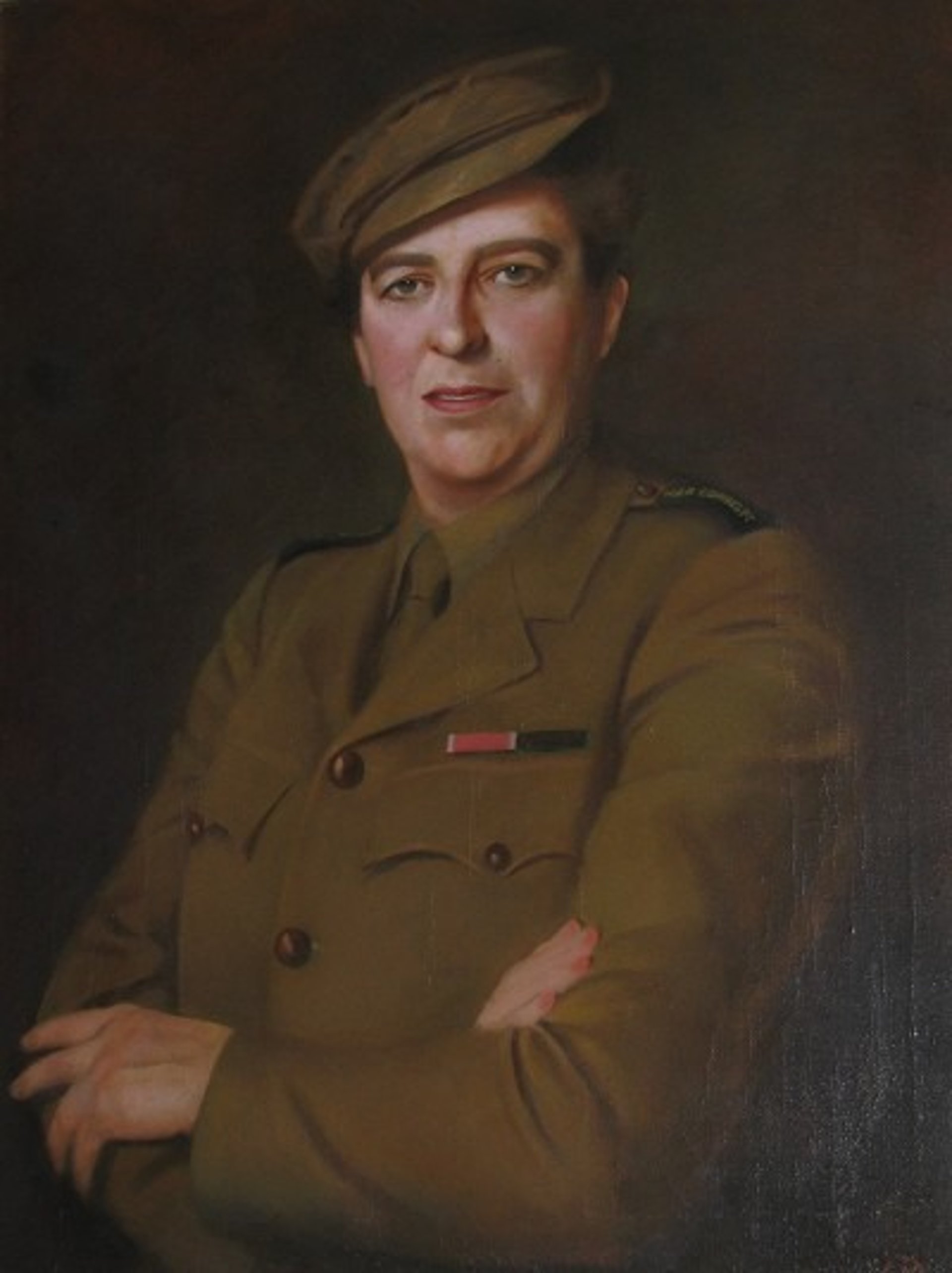
Mabel's Legacy
Mabel’s estate in 1975 (and at her death in 1988) consisted of a number of properties in Malta, including her beloved home, Villa Parisio, with its furniture, art collection, chattels and family records. She also owned controlling interests in Allied Newspapers Ltd and the Xara Palace Hotel Company Ltd.
Allied Newspapers Ltd was founded by Mabel and her family in 1935 to incorporate the family’s existing local newspaper interests and, at her death, she had a 92% shareholding in it. The remaining 8% of the shares were owned by other family members and ex-employees. All of the money invested in the newspaper group was put up by the Strickland family.
The Xara Palace Hotel Co Ltd was founded by Mabel in 1947 and she owned 99% of the company shares.
Mabel was very proud of her family heritage and had always wanted her Strickland family legacy to continue in Malta. Her favourite nephew Tom Hornyold-Strickland of the family’s senior line had turned down Mabel’s invitation to become her heir in Malta because of his obligations in the UK and, likewise, Tom’s eldest son Henry was expected to live in the family home in the UK. Therefore Mabel chose Tom’s second son, Robert, to be her heir, as they got on very well together and he was prepared to live and work in Malta. Mabel did not want her heir to be an absentee landlord and was adamant that Robert should live in Malta and be actively involved in her companies so as to maintain a close bond between them and the UK, Malta and the Commonwealth. Accordingly, Mabel made Robert a director of the Xara Palace Hotel Co Ltd and the Overseas Representative of Allied Newspapers in 1977. She had also promised to make Robert a director of Allied Newspapers Ltd when he passed his chartered accountancy exams in the UK.
Mabel was equally passionate about maintaining a free press, independent from outside political interference, and wanted her legacy to assist in providing for the continuing education of journalists, as well as to help any of her past employees who needed financial assistance.
However, when it came to making her will, Mabel was faced with a difficult conundrum. Back in 1975, Mabel made Robert her heir. But the political situation in Malta at that time was highly turbulent. Following Maltese independence in 1964 and in the move to a post-colonial scenario, the British military base, a major employer in Malta since World War II, was due to close in March 1979. So tensions and uncertainties were prevalent.
The Prime Minister of Malta wished to see all key businesses and employers in Malta, including the media, controlled by Maltese rather than by foreigners. The Government planned to achieve this through a proposed Foreign Interference Act, which became law a short time later, creating problems for Mabel’s planned Strickland succession, since Robert was not, at that time, a Maltese citizen (despite his Maltese ancestry). Although Mabel had become a Maltese citizen, Robert remained a UK citizen and so, in the event of her untimely death, Allied Newspapers would then have come under the control of an Englishman, or “foreigner”.
Mabel’s First Will in 1975
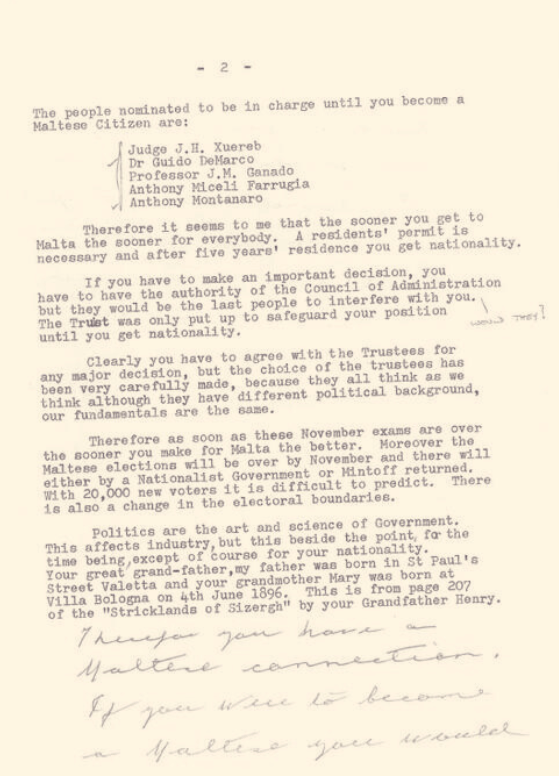
To take account of these political concerns regarding foreign interference, Mabel made provision, in her 1975 Will, for a contingent trust to hold 408 of her shares in Allied Newspapers Ltd (a controlling 55% of the equity) only in the event that she was to die before Robert achieved Maltese citizenship. Crucially, this 55% shareholding was to revert to Robert as soon as he achieved citizenship. Furthermore Robert was to inherit another 272 shares (37% of the equity in Allied) immediately on Mabel’s death. Mabel’s intentions with regard to Robert, the Trust and her executors (needed if Robert was living abroad) were clearly set out in her letter to Robert dated 22 July 1976 (see point 4). Mabel’s home and all of her other assets were to be left to Robert after he had settled a few personal bequests.
Government Interference
In view, of the proposed Foreign Interference Act, and concerns around the potential for abuse by trustees, Mabel sought to ratify her choice of heir by adopting Robert as her son in January 1977. This was done to make her chosen succession clear to family, friends, employees and the public, and to facilitate a smooth transition. However, this adoption process was blocked by the Mintoff Government in March 1977 through the enactment of legislation with retrospective effect which was quite unconstitutional.
One year later, in 1978, Robert was then banned from returning to Malta by the Government in order to put further pressure on Mabel’s succession plans and totally separate her from her heir. Robert was now forced to live and work outside Malta and Mabel, as a frail old lady, became totally isolated and unable to pass over the reins of her businesses to Robert, as she had previously hoped. This highly politicised attack, not only breached the family’s human rights, but changed the course of history for the Strickland legacy and caused Mabel to become quite ill for a time.
After Robert had been banned from Malta, In August 1979, Mabel was then persuaded to ‘revise’ her Will by her new legal advisor, Dr Guido de Marco (on his own admission). This new Will was made without any discussions or reference to Robert. Following Robert’s forced departure from Malta, Mabel had to give Dr de Marco her power of attorney, in case she became ill or incapacitated (whereas this would have normally been Robert, as her sole and universal heir).
Shortly after Dr Guido de Marco made the revisions to Mabel’s will in 1979, we now know that he was immediately instructed, by Mabel, to meet Robert in London to explain why this had to be done, what it hoped to achieve and the legal ramifications of what the changes meant. Historically, Mabel had always fully explained such matters to Robert since 1975. However, during these Mintoff years, she did not trust the security of her communications by telephone or letters, so she would rather send a personal messenger.
At the time of Mabel’s death nine years later, Robert was still unaware of the very existence of the 1979 'revised' Will. This was due specifically to the fact that Dr Guido de Marco had failed to carry out Mabel’s instructions to meet Robert, who was then living in London, so as to fully explain to him the revisions in the Will as soon as they had been made. We know that Dr Guido de Marco did indeed visit London in September 1979, but failed to arrange a meeting with Robert on that visit or at any time thereafter before Mabel’s death. Dr de Marco gave no satisfactory explanation for his visit in a subsequent letter to Robert but simply stated that he could not get hold of him. This failure was in direct contravention of his client’s instructions and points markedly towards a failure in his duty as legal advisor to Mabel. Dr de Marco subsequently became an executor of Mabel’s estate and a Council Member of her Foundation which became the largest beneficiary under this Will, giving him, thereafter, a direct conflict of interest with Mabel’s heir, rather than protecting him as was his fiduciary duty.
This original letter from Dr de Marco is in the Strickland family possession.
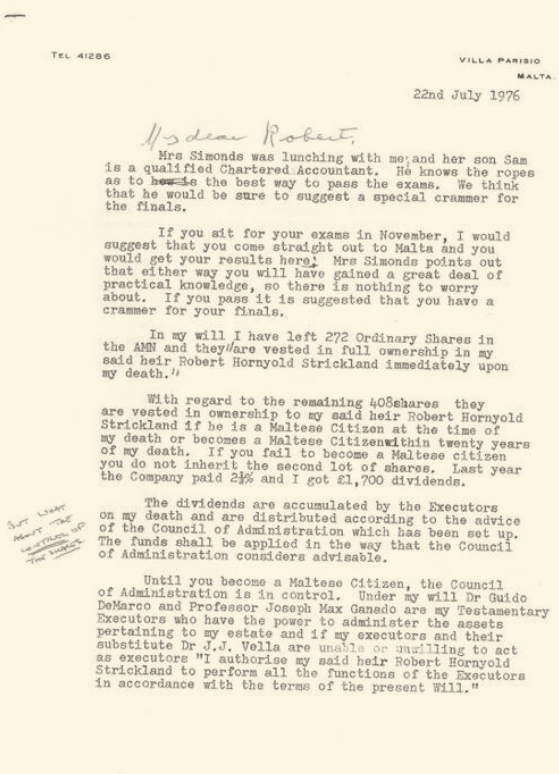
Unlike the 1975 Will, the revised 1979 Will was ambiguous and contained many contradictions. It changed the original succession plans that Mabel had set out in that she was now advised to replace the contingent family trust with a newly formed Strickland Foundation under the control of a Council of Administration, which included her two legal advisers (Dr Guido de Marco and Prof. Joe Ganado) and, at the last minute, Mabel herself as Chairman. Robert being unable to enter Malta between 1978 until 1987, Mabel specified that her two legal advisers were also to become the two initial Executors on her death. Mabel specified this, to get round the planned provisions of the Foreign Interference Act. It was important that at this stage, all of the Council Members should be Maltese, which resulted in Robert not being included until he got his Maltese nationality, as Mabel hoped.
Now rather then previously planned, where all 408 shares of Allied Newspapers Ltd. were to be put into a trust solely for Robert, with a further 272 shares going directly to Robert on Mabel’s death, the new Will provided for 508 shares to be bequeathed instead (on Mabel's death) to the newly formed Strickland Foundation. Mabel’s home and some of the contents (previously left to Robert) were also left to the Strickland Foundation instead, but with Robert being given the sole lifetime rights to live there. Robert remained Mabel’s sole heir and inherited all of her other assets and liabilities.
Since Mabel’s death these two Executors, in conjunction with the Council of the Strickland Foundation, which they or their families now control, have made it their business to block Robert from any involvement with the Foundation or Allied Newspapers which is a scandal.
In October 1979, two months after Mabel signed her revised Will and one month after Dr de Marco was supposed to update Robert in London, there was a politically inspired riot in Malta, which attacked and burned down the offices of the Times of Malta, following which Mabel had a heart attack and her health never fully recovered thereafter.
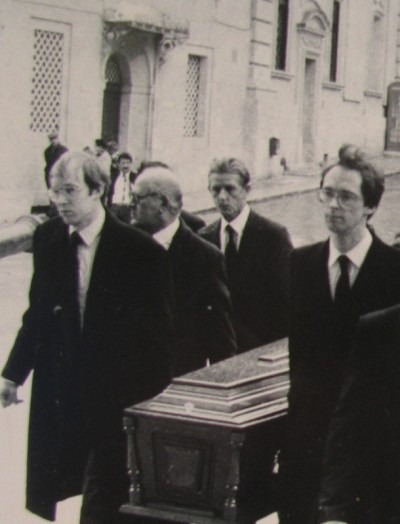
Mabel died on November 29th, 1988 just one month before her 90th Birthday. She had been increasingly unwell for over ten years but Robert had once again been permitted to visit Mabel following the change of Government in Malta in 1987 but found her to be extremely frail. When she died Mabel had a picture of Robert at her bedside.
However, within hours of Mabel’s death, one of the Council Members entered the Villa. Far from comforting Mabel’s staff, he shouted at them angrily demanding to know what was in every cupboard and drawer even whilst Mabel’s body lay in the next room, showing total disrespect for her grieving staff. Robert flew into Malta from the UK - the following day.
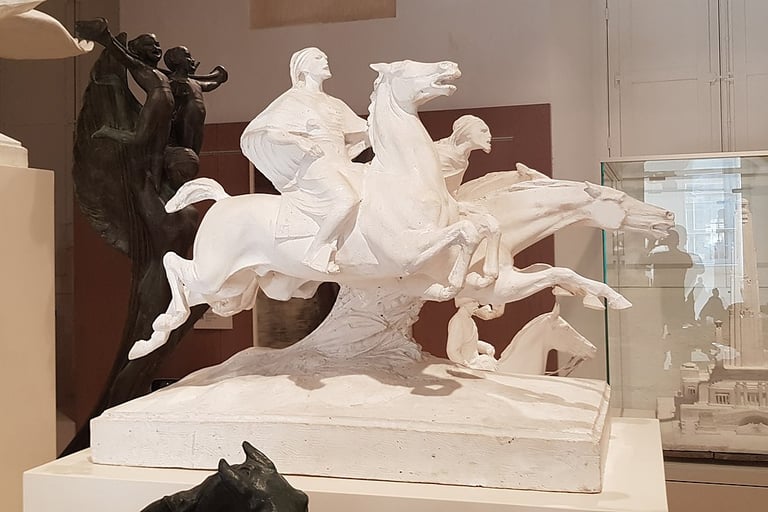
Futhermore, surprisingly, the very next day, one of Mabel’s favourite possessions, a bronze sculpture by Sciortino entitled “The Arab Horses” was stolen from her Xara Palace Hotel where it had been given pride of place for the previous 40 years. It has never been seen since. This must have been an inside job.
Mabel’s Wills were opened and published on February 7th, 1989 but, surprisingly, Mabel’s sole heir was not even notified of the appointment or invited to attend by the Executors. Because the original notary who had filed the Will for Mabel had died in the intervening years, the Executors chose another notary (a cousin of Dr de Marco) to transcribe and publish the Will. He has admitted to Robert personally that he had trouble reading Mabel’s handwriting and he said his secretary seems to have made several transcription errors. These have further confused the interpretation.
On February 8th, 1989 Dr de Marco finally informed Robert that, although he was still Mabel’s heir, her 1975 Will had been superseded by another in 1979. This news obviously came as a big shock to Robert who, nevertheless, accepted to be his aunt’s heir and paid off all her liabilities and the substantial death duties on her estate. Having done so, he assumed that he would then be entitled to the receipt of her assets. However, he quickly discovered that his Aunt’s 92% shareholding had been re-registered in the names of the two executors, without any reference to the heir, or to the validity of the bequest, and some five years before the Executors themselves had their own appointments confirmed by the Courts (without the conditions of having to provide an inventory, which is unusual). The Executors also decided, unilaterally, that a number of other properties adjoining Mabel’s home should be 'annexed' to the bequest of the Strickland Foundation (to the detriment of the heir) and even insisted that her heir be stopped from finding out the extent of the contents there were in Mabel’s home. In short Robert found that his Aunt’s two key assets had been effectively handed to parties under the control of his Aunt’s Executors, together with their families, and that his Aunt’s original intended legacy appeared to have been usurped, and her family and legal files and many of the contents of her house had been hidden from Robert to this day.
Robert initially tried to negotiate a settlement with the Executors but, after nearly 20 years of failed attempts, Robert filed a court case against the two executors and the Strickland Foundation in 2010, challenging what, in his regard, was their self-serving interpretation of Mabel’s Will.
Moreover, although Robert and his family are legally the only persons entitled to live at Villa Parisio, under the terms of his aunt’s final Will, the executors and the Strickland Foundation pursued a campaign of harassment against Robert, his wife and family, in an attempt to make the Villa so inhospitable that they would leave it. Examples of this harassment are given in Point 20 hereunder. To this day, they are still harassing the family.
Mabel’s 1979 instructions to her executors and her legal adviser are vital in providing clarity to her thinking at that time, but Robert and the Courts have been denied access to all her legal files since her death, despite these papers belonging to Robert. These files are being withheld by the families of her original executors and by the Strickland Foundation; this is despite a Voluntary Court Judgment of 9 April 2015 and a Court of Appeal Judgment of 31 January 2019, which have both ordered the documents be fully disclosed.
As a result of Mabel’s revised will, and the subsequent behaviour of the two original executors working in conjunction with the Council of the Strickland Foundation, Mabel’s wishes for a continuing Strickland legacy have not been carried out, despite the Strickland Foundation being set up “for herself and her heirs in perpetuity”.
1/3
2/3
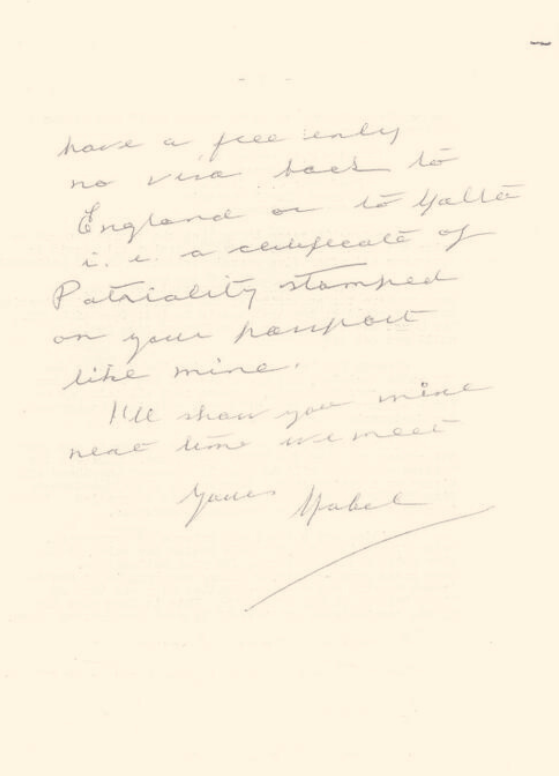
3/3
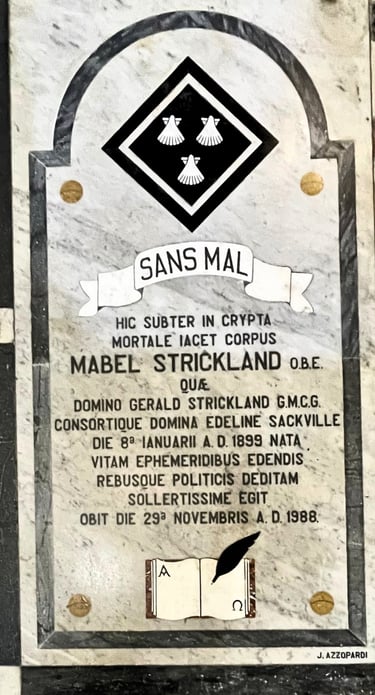
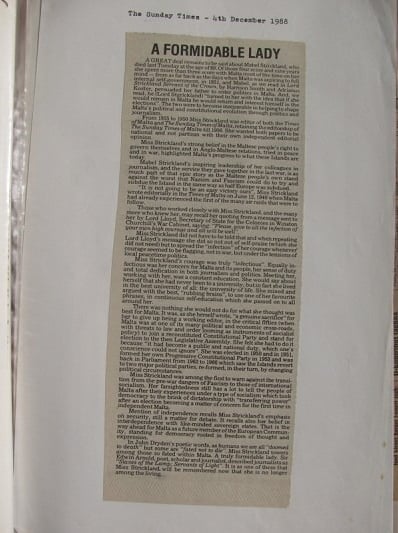
The differences between a trust and a foundation are significant in that a trust is set up for a specified beneficiary (Robert in the 1975 Will), for whose benefit the trustees are supposed to act. The trustees are the legal owner of the assets placed in trust but only on behalf of the beneficiary who owns the beneficial interest. The trustees must therefore exercise a high degree of care and skill in carrying out their fiduciary duties on behalf of the beneficiary.
In a foundation, however, the assets are all owned by the foundation itself, which is administered by a Council – none of whom own any of the assets personally, although collectively they control them. The Strickland Foundation was set up by Mabel “for herself and her heirs in perpetuity” which seems clear, but this was interpreted by Mabel’s Executors as for the benefit the Executor’s heirs and not Mabel’s sole heir and, as such, they have been competing with Mabel’s heir for her estate.
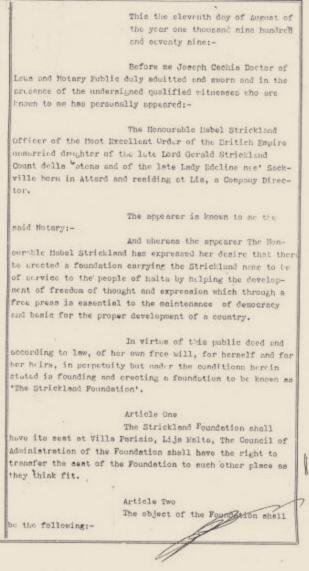
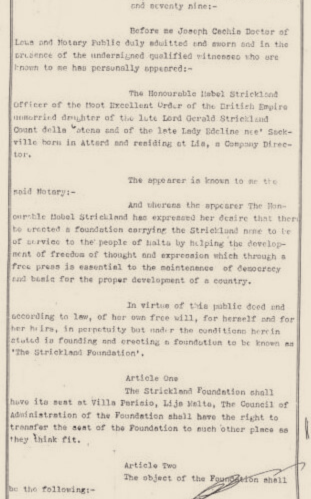
Without the disclosure of Mabel’s legal papers, it is unclear why Mabel was advised by Dr de Marco to make the significant changes to her earlier Will, as she never intended to marginalise her heir. Furthermore there has been no Strickland on the Strickland Foundation Council since Mabel’s death, which is ironic given that the Strickland Foundation was founded by Mabel “for herself and her heirs in perpetuity”, and that it was bequeathed entirely with assets owned by the Strickland family and bears the Strickland name. Instead, the Council of the Foundation (after a number of deaths and resignations) now consists of Mr Frank Bonello, Dr Mario de Marco (son of Dr Guido de Marco and himself a politician like his father), Mr Marcel Cassar and Dr Giovanni Bonello and others.
Mabel’s sole heir has, meanwhile, been deliberately excluded by the Council members (which included the original two Executors) from any role within the Foundation or Allied Newspapers, as was his legitimate expectation. These Council members were the very people Mabel originally placed in a position of trust to safeguard her wishes for her heir. The Strickland Foundation now claims to own 581 shares in Allied Newspapers Ltd, which is 79% of the shares. However, there are two problems with this claim.
First, there are conflicting accounts as to the number of shares Mabel intended to leave the foundation (508 as stated in the Will or 581 as suggested by the Executors). Secondly the Foundation is what is termed in Malta (and in other leading jurisdictions) as a “body corporate”. Under the memorandum and articles of Allied Newspapers as well as under Maltese company law, Allied Newspapers Ltd. has always been a private exempt company (with no more than 50 members) which, therefore, forbids any 'body corporate' from owning its shares. By contrast a trust, with an individual private beneficiary, could have been a shareholder but a Foundation definitely cannot.
This was therefore a major error in the drafting of the revised 1979 Will, unless the Testatrix intended a different outcome, which has not yet been come to light with the willful withholding of her legal papers by the Foundation and her executors. Under English law (which Maltese law follows), the bequest of these shares, to the Strickland Foundation in 1988, would undoubtedly have been declared “void ab initio”, causing the legacy to fail and the shares to remain in the estate for Mabel’s heir. It is hard to see how a different outcome would be legally defensible in Malta, in that it would directly violate Maltese statutory law and, even if it were possible under Maltese law for any ‘body corporate’ to be a shareholder in a private exempt company, Allied’s memorandum and articles of association specifically prohibits the ownership of its shares by any ‘body corporate’.
The earlier contingent trust had been set up, specifically, with succession planning in mind and to protect Mabel’s legacies for Robert as her sole heir. The new Strickland Foundation was also set up by Mabel “for herself and her heirs in perpetuity” as it clearly states in its Foundation Deed, and it was initially controlled by a Council of Administration, under Mabel’s chairmanship. Since the Foundation was not due to receive any assets until after Mabel’s death, it is obvious that the chairmanship of the Strickland Foundation was devised to give a role for Robert rather than for Mabel herself, but only once he had achieved Maltese citizenship, which he did eventually in 2013.
Had these Executors and Council members been acting in a bonus pater familias manner, as was their fiduciary duty, Mabel’s heir should have been elected onto the Council of the Foundation immediately after Mabel’s death and after the repeal of the Foreign Interference Act. Since he obtained Maltese citizenship there can be no valid reason to block Robert’s election to the Foundation’s Council. Instead in 2009, twenty years after Mabel died, the original two Executors, representing 50% of the Council members but also carrying the chairman’s casting vote, elected their own sons onto the Foundation’s Council. Max Ganado, son of one of the two original Executors, has since resigned from the Foundation after a failed mediation attempt to settle these matters amicably. One other Council member also resigned but Mario de Marco, son of the other Executor and a leading opposition politician, has not resigned and is allegedly the controlling force behind the Strickland Foundation, unduly influencing decisions there and in the newspaper group.
In short, the son of Mabel’s Executor now, allegedly, effectively controls the Strickland Foundation, which, in turn, purports (wrongly) to own the majority shareholding in Allied Newspapers, Mabel Strickland’s most important asset. If Mabel had meant for the newspaper group she created, and ran, for over six decades to have been left to her legal advisor’s families and to their friends, as is effectively now the case, she certainly went about it an odd way, by declaring Robert to be her sole heir rather than naming specifically Dr de Marco, Prof Joe Ganado or their sons. If Mabel had intended her fortune to be have been passed outside her family, to her lawyers, which would have been highly surprising, one would have expected her to say so clearly. She said no such thing and there is not a shred of evidence that would support such an intention.
In 1989, shortly after Mabel’s death, Allied Newspapers Ltd registered her entire shareholding in the name of the two original executors “on behalf of the estate”. This transfer was done without the knowledge of the full Board of Allied or Robert (as Mabel’s heir) and fully five years before the executors were unconditionally confirmed in their positions as Executors by Chief Justice Noel Arrigo. Chief Justice Arrigo was subsequently removed from his position for financial impropriety. Under Maltese Company law, these shares would normally have been registered in the name of Mabel’s heir until her legacies were validated, before being passed over to the appropriate beneficiaries. Instead, the registration of these shares, in the names of the original Executors, gave them a controlling voice in the affairs of the Foundation from that moment on. The Executors decided, unilaterally, how many shares Mabel intended to leave to the Strickland Foundation because it was not clear how many, if any at all, could be bequeathed to them.
The Executors also decided, unilaterally, the extent of the property known as Villa Parisio (Mabel’s home), which was to be left as a legacy to the Strickland Foundation and they decided, without any attempt to consult the heir, that it consisted not just of the property purchased as Villa Parisio but several other neighbouring properties all owned by Mabel but purchased well after Villa Parisio. This behaviour, unsurprisingly, has resulted in a number of Court actions which were entirely avoidable if the Executors had behaved properly. Of the 92% shareholding in Allied Newspapers Ltd owned by Robert’s Aunt, only 13% has since been transferred into Robert’s name to date, whilst the balance of 79% is registered improperly in the name of the Strickland Foundation until the Court rules to whom these shares belong. Meanwhile all of the Board and senior positions in Allied Newspapers Ltd. have been decided by the Strickland Foundation. In 2009, when it became evident that Robert intended to sue the Executors and the Strickland Foundation for diverting assets due to him as the heir, the original two executors, Guido de Marco and Joseph Ganado, using their now controlling votes on the Foundation’s Council, due to the death of a number of the original members, saw elected their own two sons (Mario de Marco and Max Ganado) onto the Council of the Strickland Foundation. This overt act of nepotism reinforced the control of the original Executors’ families, at the expense of the heir, and ignored the rules set out in the Foundation’s Statute on the procedure to elect Council members. This 2009 election of the Executors’ sons onto the Council was also of questionable legality since there had not been a valid quorum on the Strickland Foundation Council for the previous five years.
The executors justified their ‘power grab’ by saying Robert was not Maltese (and the rules stated that Council Members should be Maltese). That excuse can no longer be used since Robert now has Maltese nationality. In any case, the Foundation’s Council could have changed the requirement for Council Members to be Maltese at any time after the Foreign Interference Act was repealed (following Malta’s accession to the EU in 2004), but they chose not to do so, despite changing the aims and rules of the Foundation in other respects.
In January 2010, after 21 years of fruitless negotiations to reach an amicable settlement on the interpretation of his Aunt’s Will, Robert filed his legal action (34/2010) against the Executors and the Strickland Foundation. This finally resulted in a judgment on 10 May 2018, but this confusing judgment was immediately appealed by both sides. Robert filed his legal action in 2010 reluctantly, because Guido was a former President of Malta and had previously been a top criminal lawyer and deputy prime minister, and thus had many influential friends. Joseph Ganado was also a leading civil lawyer and university lecturer. An extraordinary ruling disallowed a complete re-trial given that in the original judgement of the interpretation of this very unclear will, where the contents of the villa were given to Robert but all the farmland (which has no relevance for the Strickland Foundation but is worth over £3million) was given to the Foundation. The Foundation has no farming objectives whatsoever! Surprisingly on appeal, Robert lost the farmland AND the contents of the family villa which included precious articles, collections of ancestors and a lot of sentimental family objects.
Despite inexplicably holding the 79% shareholding in Allied in their own names for 21 years (ostensibly on behalf of Mabel’s estate), just two weeks after Robert filed his court case, the Executors responded by transferring this 79% majority shareholding in Allied Newspapers Ltd, to the Strickland Foundation. This transfer, which Robert believes is invalid, was done by stealth, without the knowledge of the Allied Newspapers Board or the other shareholders, and entirely without the approval of the heir or the Courts.
Because the Executors had these shares registered in their names until 2010, and because the dividends from Allied until that time represented the majority of the Strickland Foundation’s income each year, it gave the Executors de facto control over the affairs of the Foundation and hence Allied Newspapers as well. The Executors reinforced this control by not replacing any of the Council members who died between 1989 until 2009 (by which time they were permanently below their allowed minimum number of Council members), then electing their own sons to the Council (instead of Mabel’s chosen heir) in 2009 and, at the same time, using the Strickland Foundation’s supposed controlling vote in Allied to elect themselves as Directors on the Board of Allied.
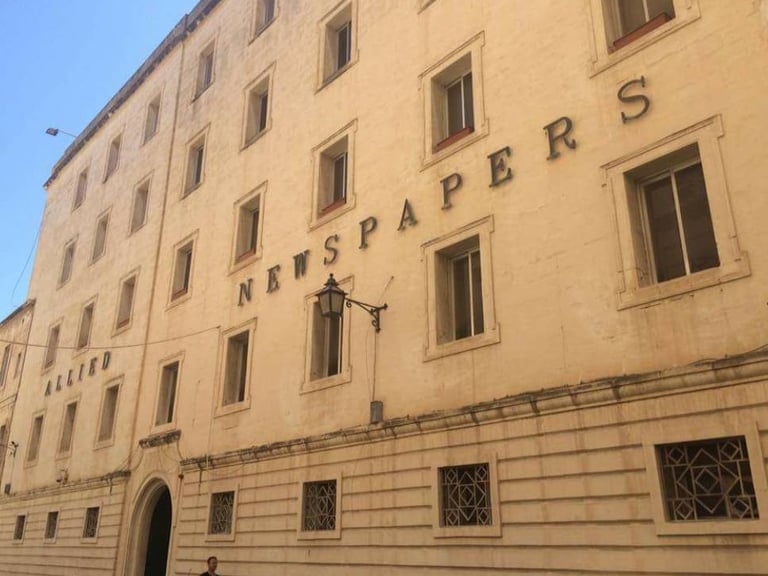

Allied Newspapers Ltd has failed to produce any valid documentary evidence for this 2010 transfer of the majority shareholding in Malta’s leading media company. The judge himself, in the Voluntary Court, confirmed that no valid instrument of transfer has been produced. This alone should tell anyone that this transfer was irregular/fraudulent.
Such a transfer could not be valid, in any event, because of the restrictions of the memorandum and articles of Allied, as well as Maltese company law, prohibiting private exempt companies, such as Allied, transferring any shares to a ‘body corporate’, such as the Strickland Foundation (which is registered as Legal Person Foundation 35).
The company cannot even claim that the shares were transferred out of Mabel Strickland’s name into the names of the Executors in 1988 since it is on record as having ‘lost’ the original Share Register. This is rather surprising since all the other statutory books, originally kept with it, have survived intact. Even a managing director of Allied Newspapers has contradicted his colleagues by swearing under oath that he saw the Allied shared register after the Times of Malta fire where allegedly these people said the register was destroyed by fire. So who is lying?
Although this transfer of the majority shareholding of Allied would seem to be “void ab initio” legally, it does not appear to have ever been questioned or challenged by the Board of Allied or its auditors which in itself is strange. Allied’s own company secretary, Dr Clinton Calleja, was responsible for checking, accepting and recording the transfer (on a newly reconstituted computerised share register) but he also worked for Guido de Marco & Associates giving him a serious conflict of interest.
This 2010 transfer is also questionable because the number of shares transferred to the Foundation was not the legacy of 508 shares proposed in Mabel’s Will, but 581 shares. This discrepancy is worrying.
The transfer has now been challenged in a second legal action, filed by Robert in 2015, on a point of law, but four years later this case has been seriously held up by the defendants’ delaying tactics.
Under the provisions of UK company law (upon which Maltese company law is based) this legacy would have been declared null and void because of these irregularities. In Malta we now know that an amendment to this specific provision of the Companies Act on the definition of “body corporate” was subsequently passed in 2013, disguised as a budgetary amendment by the outgoing Government. The incoming Government accepted this amendment, with no questions being asked as to the reasons for it, but, despite repeated requests to the Government for the detail surrounding this amendment and its original proposer, no explanation whatsoever has been received. However, notwithstanding the questionable motivation for these statutory amendments being passed into law, it does not have retroactive effect, and thus the 2010 transfer is still “void ab initio”.
Furthermore, it took the previous Managing Director of Allied Newspapers Ltd, Adrian Hillman (a close friend of Mario de Marco), two years to provide the heir with any documentation at all about the 2010 transfer. Hillman, the campaign manager of Guido de Marco in 1996, who was recruited and eventually appointed MD by the Strickland Foundation in 2012, has since resigned all his positions in the Allied Group after allegations of financial impropriety and money laundering were made public. It was alleged that he, and others, had set up secret offshore bank accounts in conjunction with the company’s main newsprint supplier. An internal Board of Inquiry, chaired by Judge Giovanni Bonello, (Conveniently becoming the chairman of the Strickland Foundation) was immediately set up by Allied Newspapers to investigate these allegations, yet none of the minority shareholders was allowed to see this report, which we understand will never be made public. This is both curious and lacks proper transparency.
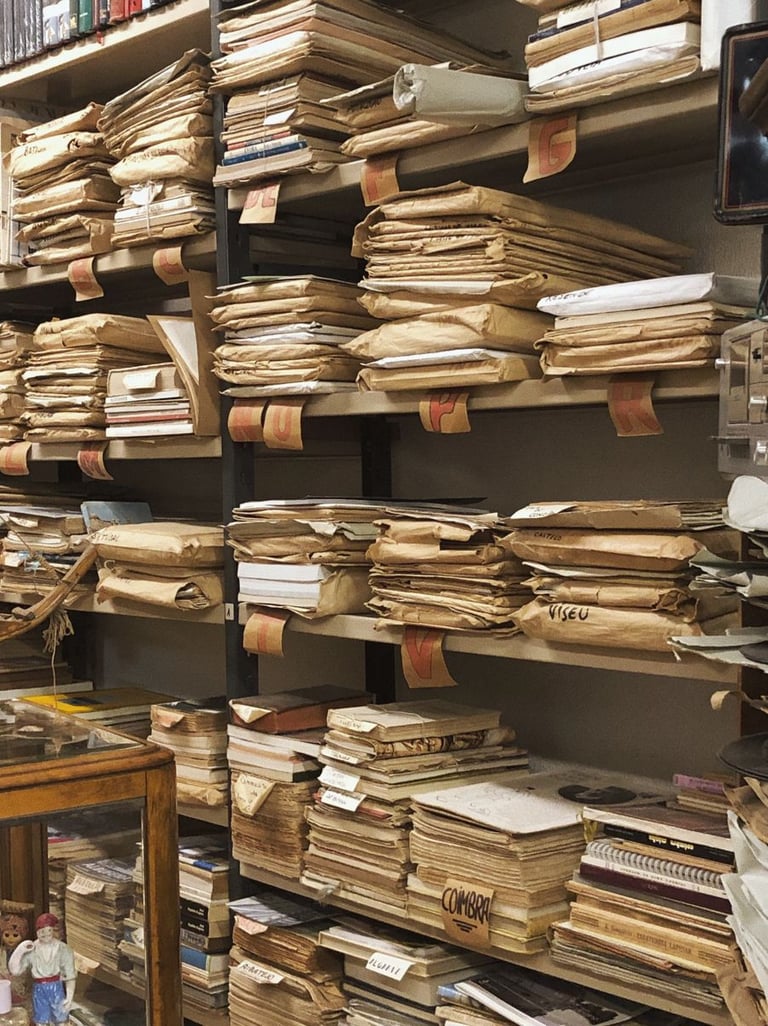
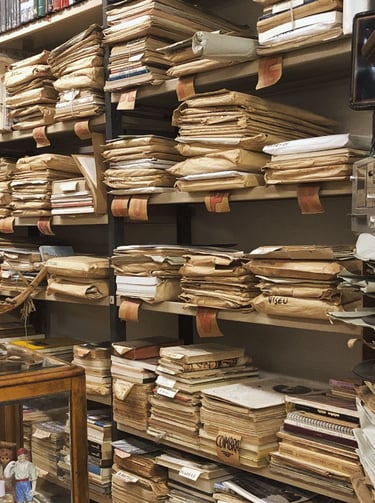
Generic Archives


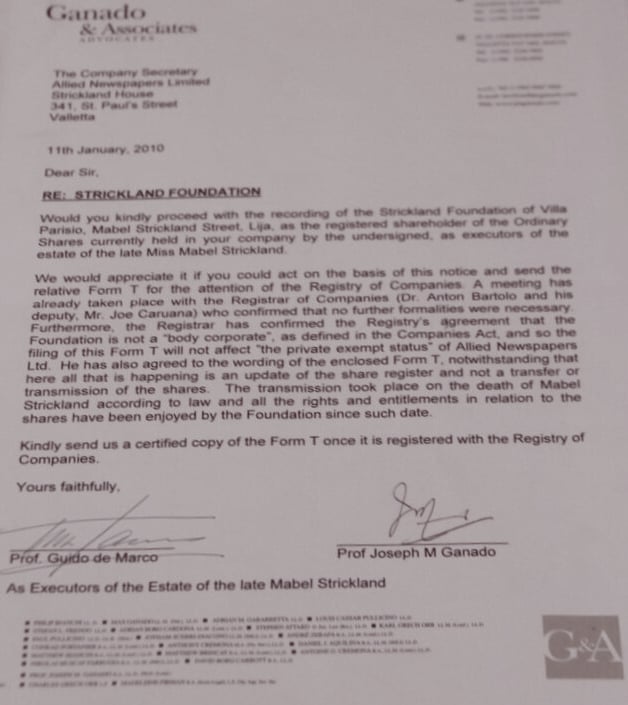
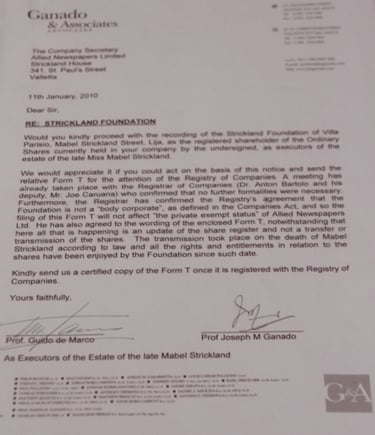
The core issue around this very odd letter of instruction (from the Executors Demarco and Ganado to the Company Secretary of Allied Newspapers Ltd) concerns what Robert maintains is an allegedly illegal/irregular transfer of the majority shareholding in Allied Newspapers Ltd from the estate of Mabel Strickland (died 1988) to the Strickland Foundation in 2010. This was done in a hurry, some 22 years after her death, and just 2 weeks after Robert filed his first court case against the Executors seeking clarification of his Aunt’s will. This letter raises more questions than it answers.
Key points raised:
This January 2010 letter from executors Ganado & De Marco simultaneously and contradictorily asserts that: -
(a) the Allied Newspaper Ltd shares (majority shareholding of nearly 78.5%) were previously held by the executors in their names for 22 years after Mabel’s death.
(b) no further transfer is taking place, yet the executors are still instructing Allied Newspapers to register the Strickland Foundation, as shareholder, via a Form T from the Malta Financial Services Authority (MFSA) which is only a regulatory body. This letter is both contradictory and dodgy.
This 2010 ‘registration’ of the majority shareholding in Allied occurred 22 years after Mabel’s death, far exceeding the normal 10-year period for estate administration under Maltese law.
No evidence has ever been produced of the initial transmission of Allied shares from Mabel to her executors in 1988, nor of their registration into Allied’s company share register, or with the MFSA.
The share register of Allied Newspapers was allegedly “lost in a fire” before 1988 and has never been found; the company secretary later produced only an Excel spreadsheet as a company register, which Robert maintains is not only highly irregular but open to tampering.
This alleged loss by fire of the Allied share register is not true according to an erstwhile Managing Director of Allied who testified, in court, to say he had seen it after the fire. So who is hiding the share register and for what reason, if not to cover up malfeasance?
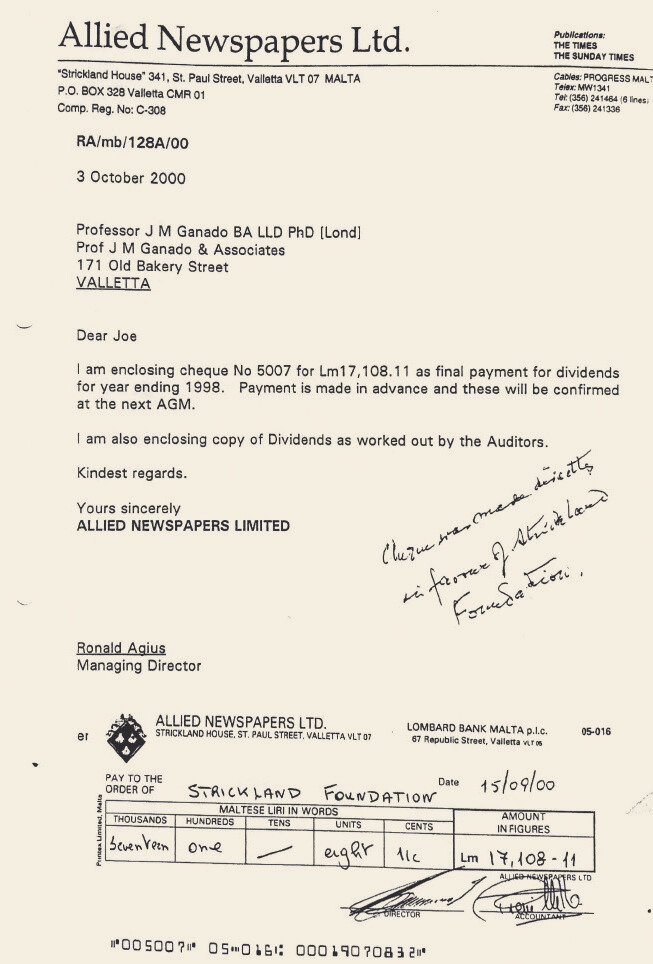
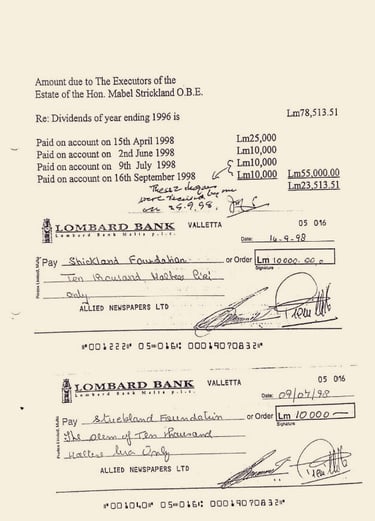
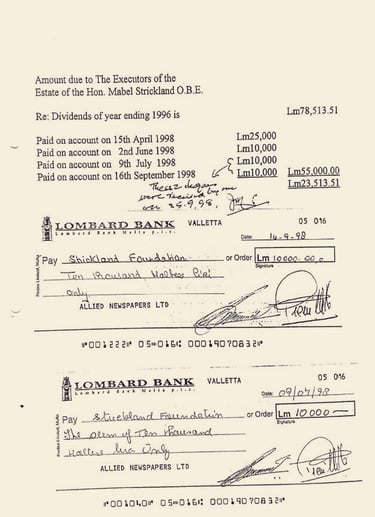
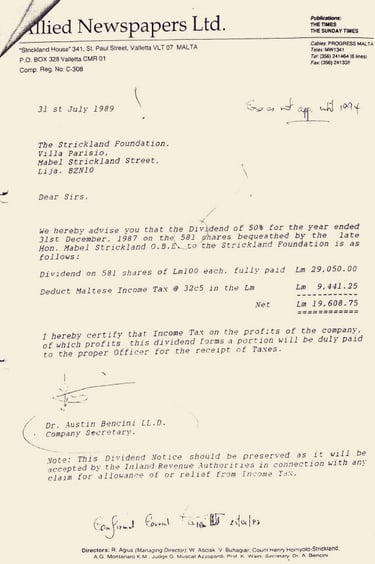
Worryingly, despite the Allied shares remaining in the executors’ names for 22 years until 2010, the Strickland Foundation still somehow managed to receive (and bank) millions of improperly paid dividends (over €3.5 million proven) from 1988 onwards. (See proof in cheques below). Furthermore, Robert found the executors’ accounts never reflected these payments.
Besides, the Strickland Foundation never could be a shareholder in Allied anyway as it was precluded from doing so under Allied’s articles of association… because the Foundation was, and remains, a ‘body corporate’. More relevant still is that the Executors knew of this imposition from legal advice they had previously sought prior to 2010 from both Edwin Vella and also Mario de Marco (one of the Executor’s sons). Yet knowing this they still went ahead and ordered the transfer.
The MFSA stated, in court, that they had no knowledge of any meeting with the Executors about this share transfer. The MFSA (now Malta Business Registry) are also refusing to produce the White File to court – which contains all the contemporaneous correspondence around what would have been one of the largest share transfers in Malta’s corporate history. So why can no notes be found?
The Judge has already ruled that this odd 2010 letter from the executors is NOT an instrument of transfer.
This dodgy letter suggests that the MFSA has confirmed, for the purposes of this transfer only, that the Strickland Foundation is not a ‘body corporate’ – demonstrating that the Executors asked the MFSA to profer legal advice on the status of a Foundation. If this is true, when the MFSA is not at liberty to offer up legal advice; this would mean that the MFSA was acting in an ultra vires manner.
And if there was, ever, an "in person meeting" between the executors and the MFSA where are the meeting notes for this? Such an important meeting surely would have recorded minutes given that this was one of the largest transfers of the leading media organisation in Malta? This meeting should have of course been properly recorded and if not why not? - the courts need to insist that these meeting notes being produced.
Robert Hornyold-Strickland, Mabel’s sole and universal heir, was never consulted by the Executors in this matter or asked to approve this transfer.
In short this letter tells us that a fraudulent, contradictory, and undocumented 2010 registration of Allied shares took place to an ineligible entity (The Strickland Foundation). We also know that, nevertheless, The Strickland Foundation had been receiving dividends for 22 years, directly from Allied, and sometimes even paid in advance of other shareholders. Still, critical documents are still missing or withheld. The authorities (MFSA/MBR) persist in refusing to cooperate with the court case. Why is a clique of people hiding this essential evidence?
To Robert, and any enquiring mind, this letter is so contradictory that it simply demonstrates that the Executors had to be lying….They certainly were failing in their fiduciary duties to protect Mabel’s heir and, if anything, were overtly competing with him.
By their actions in 2009 and 2010, the Executors completely ignored Mabel Strickland’s well-known wishes for her heir and appear to have diverted control of the newspaper group to their own families and friends. Following the death of the two original executors and the resignation of Max Ganado and one other Council member, Mario de Marco, a leading opposition politician, remains on the Council with four others. All but one of them was appointed by the Executors or their sons.
The last appointment to the Council, the new chairman, Judge Giovanni Bonello, was made, with no due democratic process or public advertisement of the post on offer; no effort was made to discuss his appointment with the Strickland family. It is common knowledge that, ever since the death of his father, Mario de Marco has controlled the newspaper group from behind the scenes through his undue influence on all key management and editorial appointments. Mario deMarco denies this.
The new chairman’s recent appointment to the Foundation was even more surprising given that, only a few weeks previously, he had been in charge of the supposedly independent Board of Inquiry into the alleged wrongdoings of the newspaper’s former managing director Adrian Hillman.
Further evidence of Mario de Marco’s undue influence over the newspaper group can be seen in the large number of articles published in the Times of Malta and The Sunday Times of Malta, written by him and also in the way that the editors of these papers have seen fit to censor any news or balanced analysis of the heir’s dispute with the Strickland Foundation in their newspapers, for many years, on the basis that this matter was not of public interest – despite other papers following the dispute closely.
This undue political influence over Malta’s leading English language media group is precisely what Mabel sought to avoid when she set out her aims for her Foundation – i.e., to encourage democracy and to maintain the independence of the press. These qualities were precisely what Mabel’s papers represented in her lifetime and were created by many decades of hard work by her and her team of dedicated journalists and printers.
The separation of powers (of which a free press is regularly regarded as the fourth pillar) has long been a touchstone of economic developed nations that are free from corruption. Providing otherwise, puts Malta under the spotlight for all the wrong reasons. Journalism should not be able to be bought and sold and controlled or unduly influenced by politicians to suit their own ends. Journalism needs to be free from political, judicial or legislative influence – precisely as Mabel originally intended.
What was once Malta’s leading and highly respected independent publishing group has now been effectively hijacked by a political clique for its own ambitions.
Since Mabel’s death, there has been no democratic or transparent process in the selection of Foundation’s Council members, as required by the Foundation’s Statute, and Council members are elected for life unless they choose to resign. The guiding aims and principles of the Foundation have been ignored on several occasions or have been changed. The Strickland Foundation, registered as a legal person (LPF 35), does not publish their account which, while currently not required by law, is hardly transparent for a charitable body.
Not only have the Executors, or their sons, controlled the appointment of all of the Directors and Senior Management of Allied Newspapers Ltd since Mabel’s death, but Mario de Marco is also the Company’s legal representative, his brother-in-law the company’s architect and his business colleague is the Company Secretary of Allied Newspapers Ltd.
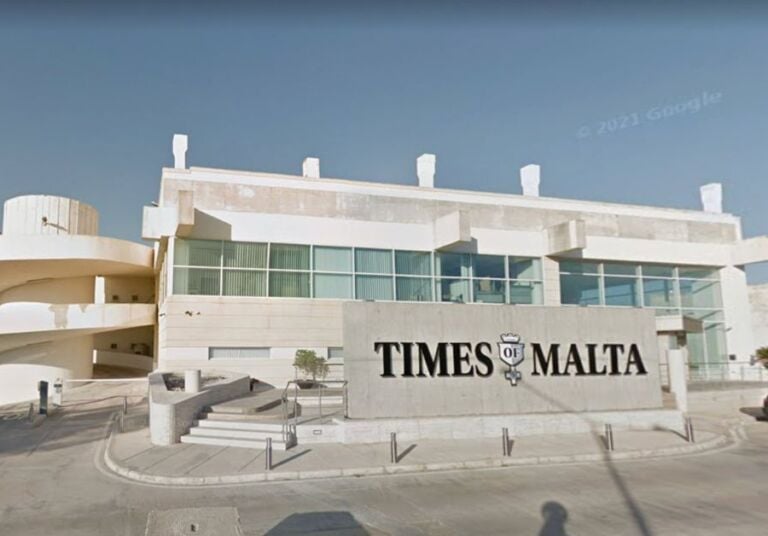
It now also transpires that the Allied Board was paying dividends directly to the Strickland Foundation from 1998 to 2010 before the Foundation was even registered as a shareholder. Although we now know that it is, in fact, ineligible to be a shareholder of the company, over €3 million of dividends had already been paid to the Foundation, instead of to Mabel’s estate over this 13-year period. Neither the Board of Allied, nor its auditors, seem to think that this is important or a matter of public interest, and the Foundation, as noted above, does not disclose how it spends its money.
1/3
2/3
3/3
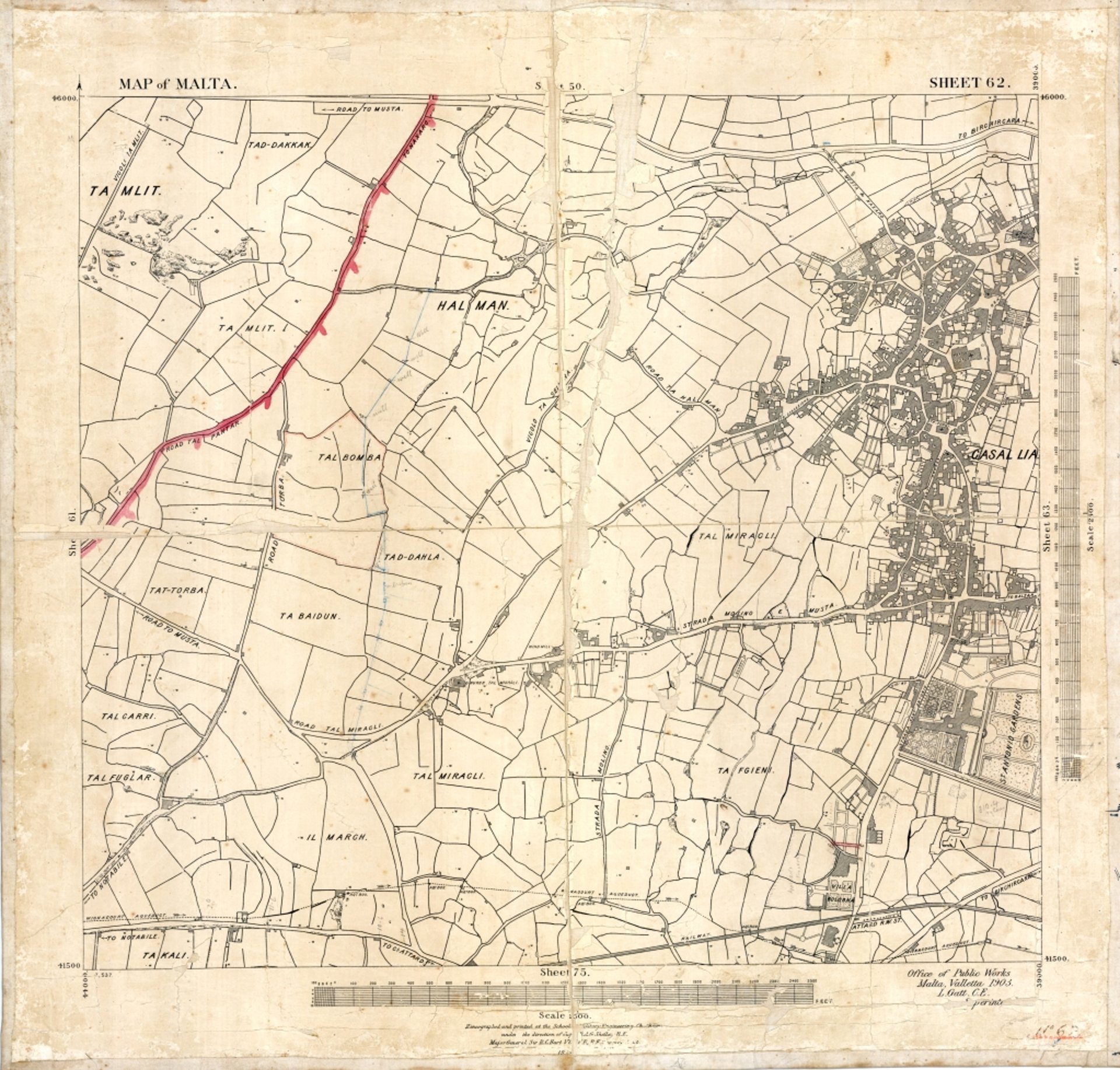
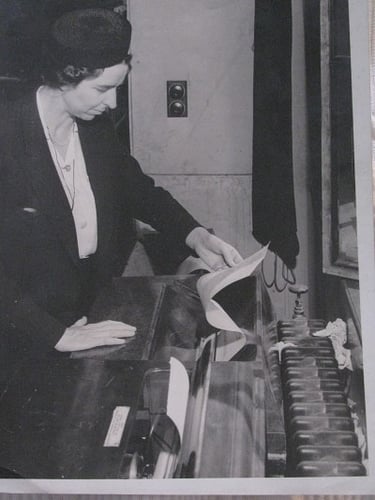
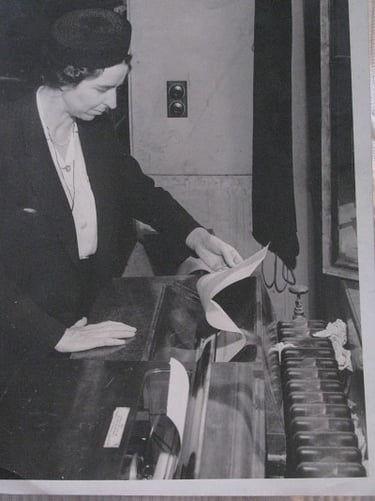
Since the death of both the original executors, Robert Hornyold Strickland, being Mabel’s heir and the only person still able to be an executor, was appointed by the Courts on 7 April 2016 to fulfil any final duties required of the executorship. However, Max Ganado, who had possession of Mabel’s executorship files following his father’s death, took over two years to pass only some of the executive files to Robert, despite Robert being Mabel’s sole heir and acting Executor. All the executor files should be passed over to Robert in their entirety and not redacted.
Missing information includes cheques made out to the Strickland Foundation, missing executorship bank statements and dividend warrants for each of these improper dividend payments. Allied Newspapers Ltd has also failed to pass on to Robert any of these dividend warrants or details, as ordered by the Voluntary Court in 2015.
Similarly, the bulk of Mabel’s personal, family, administration files and legal papers have been wilfully kept from Robert by the Strickland Foundation and the de Marco family. These files belong to Robert as Mabel’s sole heir and the Courts have now ordered the release of some of these files, but Robert has yet to be given access to any of the correspondence or instructions relating to his Aunt’s final Will or the setting up of the Strickland Foundation.
Robert is required to submit a final statement of affairs of the executorship to the Courts, having satisfied himself, as heir that everything is properly in order. However, Robert needs access to all the above files to achieve this, as well as details of all irregular dividends paid by Allied Newspapers Ltd.
Despite repeated requests over many years, Mario de Marco, the Strickland Foundation and the Board of Allied Newspapers have all failed to pass on these files. By their actions in withholding files and information, they are preventing the new executor from carrying out his duties and interfering with the Court’s ability to dispense proper justice.
The Executors, the Foundation’s Council members and their staff have all waged a systematic campaign of abuse, insults and harassment against Robert and his family, which has been distressing for them and is now well documented.
The Foundation and the Executors frequently used the Villa and its gardens for private parties, unrelated to their legitimate purposes, and completely without the permission of Robert and his family, who are recognised as the only people allowed to live at the Villa. These functions included the Executor’s birthday parties, anniversary parties and even the wedding reception of Adrian Hillman, a close personal friend of Mario de Marco.
Lunch parties were held in the family dining room, even when the family was in residence, with the family excluded from any involvement and unable to use their own kitchen or dining room. The family’s kitchen equipment, pots, pans and dishes etc., were repeatedly moved by Foundation staff to Robert’s bedroom when the family was abroad and unceremoniously dumped on his bed.
Building works were frequently undertaken at the Villa, without consulting the family, to make it difficult for the family to stay there. These works were frequently carried out when the family was abroad and could not object. These included illegal works (which subsequently had to be pulled down), and other works completely out of character with a heritage home.
Works undertaken shortly after Mabel’s death included the removal of all the beds and mattresses from the bedrooms and most of the baths from the bathrooms, making it virtually impossible for the family to stay at the Villa.
Other bedrooms and bathrooms have been kept permanently locked and used to keep Mabel’s files away from her heir or turned into a kitchen for the Foundation’s ‘gardener’, entirely without the family’s consent. Meanwhile, the gardens have been woefully neglected, many of the fruit trees destroyed and the family prevented from taking care of them.
Rooms in the Villa were renamed by the Foundation so as to make those rooms, specifically referred to in Mabel’s Will, unrecognisable by the Courts. The Foundation set up an office within the Villa and stored many of Mabel’s papers and possessions in locked rooms, some of which remain permanently locked to this day. One of these rooms was even designated in Mabel’s Will as for Robert’s exclusive use but he had to take the Foundation to court to get its doors unlocked. Many of Mabel’s files and books have even been removed from the Villa by the Foundation to another property nearby.
The privacy of the Strickland family has, for years, been traduced by the Foundation who, very intrusively, installed CCTV cameras in all the main rooms in the house, under their exclusive control, which seem designed purely to spy on the family. This was done entirely without asking the family’s permission, until the Courts ordered their removal a few years later.
The Foundation also still employs a ‘gardener’ who has done no gardening at the Villa for over five years but is frequently found right outside Robert and his wife’s bedroom looking into the room. He keeps a number of dogs and other animals and birds in the garden outside the family bedrooms, totally against their wishes. One dog is so neglected that it often barks all night long and yet the gardener refuses to keep the dog at his own home.
A similar situation exists with the collections of family portraits and artworks, chattels and family records from the Villa. Many other items, such as books and papers, were removed from the Villa by the Foundation or the Executors many years ago (and have not been seen since) but are believed to be stored by the Foundation in a nearby garage.
One of these artworks, a beautiful bronze statue of the ‘Arab Horses’ by Antonio Sciortino, was stolen from the hallway of the Xara Palace Hotel Co on the very night Mabel died. It, too, has never been seen since although the plaster original of it has pride of place in the new Muza Art Museum in Valletta.
The harassment continues to this day and is well documented. It appears to be aimed at preventing the family from living peacefully in the Strickland family home, with their family possessions, as Mabel unquestionably intended.

In May 2018 the Judge ruled, with reference to the original 2010 Court Case, that the Xara Farm in Lija was, he believed, an integral part of Villa Parisio (and thus belonged to the Foundation), despite a mass of evidence on the file to suggest otherwise. The Xara Farm had always been run as a business, and managed by the Xara Palace Hotel Company since its original purchase by Mabel but the Court File has misfiled a number of crucial documents provided by Robert which was only discovered after the Judgement.
Furthermore the judge ordered the Strickland Foundation to restore certain rooms to the way they were at the time of Mabel’s death but decided, confusingly, that Robert, his wife, three children and any guests, should be restricted to a single bedroom and bathroom between them at the Villa (as suggested by the Foundation but not supported by the Will).
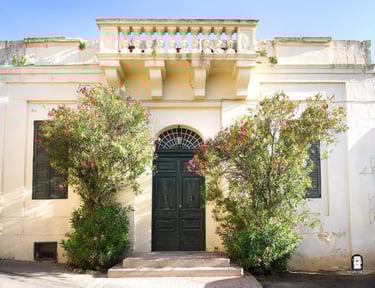
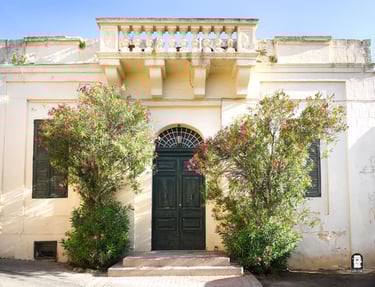
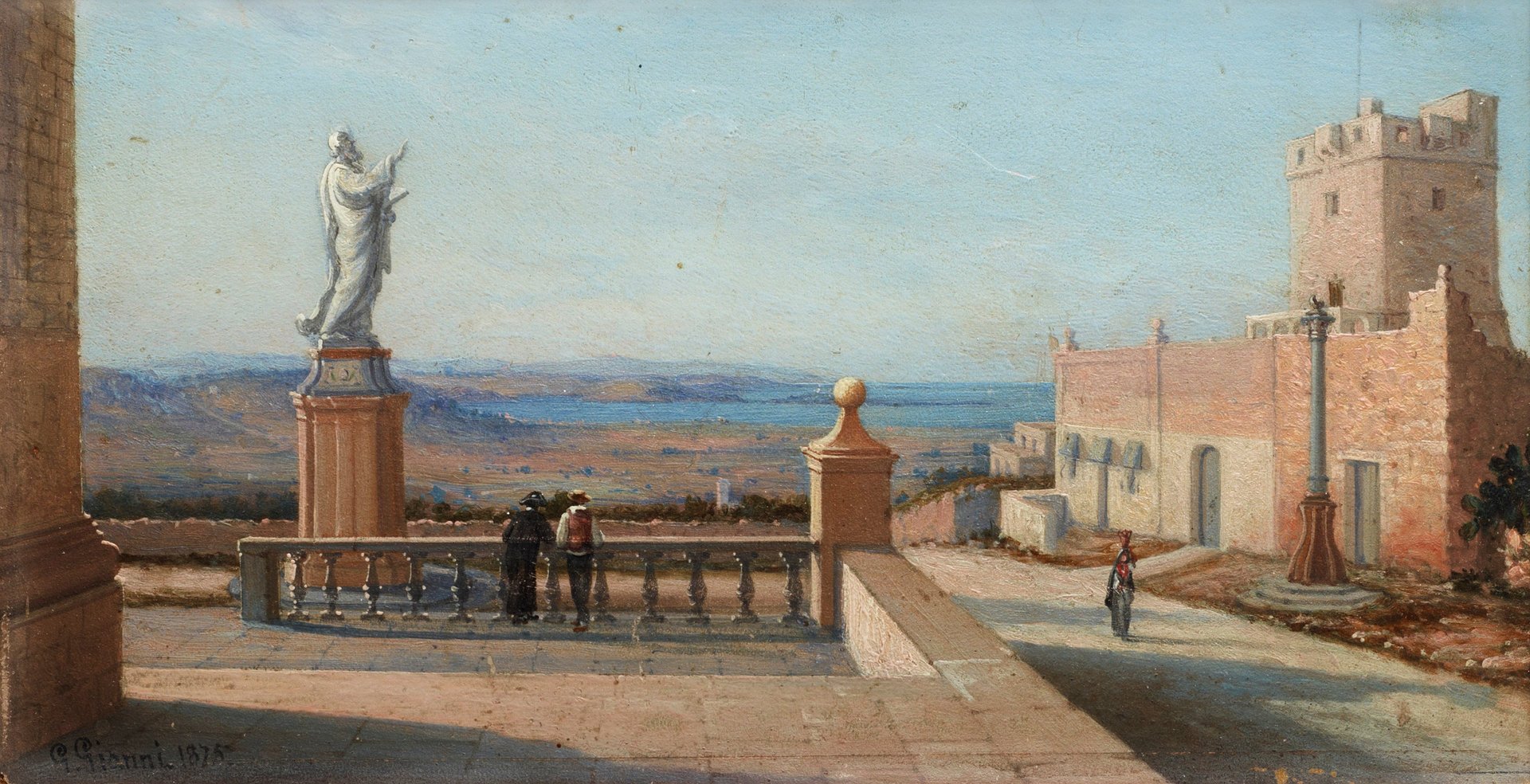
Villa Parisio
This case shows a catalogue of financial impropriety, dereliction of duty by the Executors, disregard for the law and of the family’s human rights, poor governance and abusive behaviour by the original Executors against the Strickland family – all to the benefit of the Strickland Foundation (controlled by themselves and now their family and friends). Apart from Robert and his family, the other losers in this situation are the minority shareholders and employees of Allied Newspapers and the readers of their newspapers, as well as the people of Malta who would expect to see respect for the law.
One prominent Maltese politician has been quoted as saying that “this situation is a clear case of daylight robbery”. If Mabel wanted the benefit of her assets to be inherited by her legal advisors and their progeny, very clear words would have been needed to make that clear. The opposite is true. Mabel clearly intended Robert to be her heir. She provided for that in her will. The fact that Strickland assets still remain under the control of her erstwhile legal advisors’ sons is a disgrace and makes a mockery of natural justice and of the political and judicial climate in Malta. It must be rectified.