
The Court Cases
Understanding the requirement to uphold freedom of expression, the European Court of Human Rights, in 1979, noted the media should have not just the right, but also the duty, to discuss matters of general public interest. And this is always advised, notwithstanding that litigation may be pending before the courts.
Proceedings that are civil (and not criminal), are normally heard by a Judge, who is automatically assumed to be above any media influence and so logically, it follows, that the integrity of any impartial proceedings should therefore not be disturbed.
As Robert's main case confronts human rights abuses, there is no question that it is of public interest given the politically exposed persons who are involved.
Therefore, in these pages and documents, the aim is to outline the merits of the cases, the essential points and questions which are at issue. This case is undoubtedly of public interest, with some media in Malta following it with interest, but certainly not all. In particular, The Times of Malta does not consider this story to be of public interest, so its readers are being kept in the dark, unless they read other publications. This website sets out the basic facts of the situation.
There are currently two main court cases concerning Mabel Strickland’s legacy.
The first case (which has now concluded) relates to what Robert contends is an extraordinary and self-serving interpretation of Mabel Strickland's will by her two original Executors, Professor Guido de Marco and Professor Joseph Ganado. He contends that assets in Mabel's estate, which did not form part of any defined legacy were passed, nevertheless, to the Strickland Foundation instead of her heir. These assets include land, shares, family heirlooms, collections and files. Robert has not won this case despite appealing.
The second case relates to the improper transfer in 2010 of Mabel Strickland's majority shareholding in her Allied Newspapers business to the Strickland Foundation when: -
1. The SF was ineligible to be a shareholder in Allied Newspapers Ltd.
2. the extent of the bequest to the Strickland Foundation was unclear from the Will.
3. No valid instrument of transfer has ever been produced by either the Executors or Allied for the irregular transfer of the majority shareholding, and bizarrely, the shareholder's register has, allegedly, been "lost".
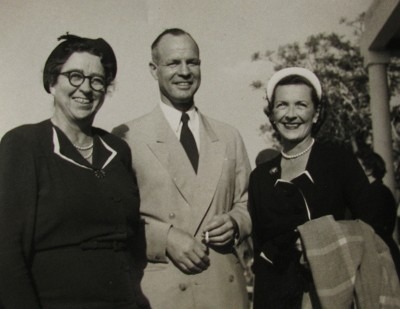
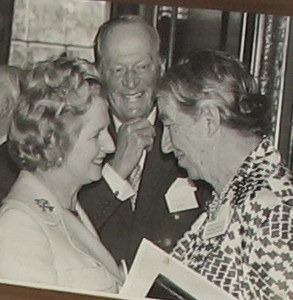
THE EXECUTORS’ INTERPRETATION OF MABEL STRICKLAND’s 1979 WILL being Case No 34/10/SM
After decades of Robert trying to negotiate an amicable resolution to the allocation of Mabel Strickland's estate by the Executors, no agreement was reached and so a Court Case was filed by Robert, very reluctantly, in January 2010, to ask the Courts to consider whether certain aspects of the Executors’ interpretation of Mabel’s will were valid.
Robert challenged the Executor’s interpretation of his aunt’s will, where he believes that the Executors gave assets to the Strickland Foundation which properly belong to him, as heir. He contended they had been trampling on his real right “of use and habitation” at Villa Parsio, Mabel’s erstwhile home in Malta.
One of the problems which had held up this case, from the outset, was the persistent refusal of the Executors and the Strickland Foundation to pass over, to Robert, all of his Aunt's legal and administration files which, under Maltese law, belong to him. These files would have helped clarify Mabel's intentions regarding the revised will and the setting up of the Strickland Foundation during the 1979 'troubles'. The defendants have consistently refused to pass all of these files over, making the court case inevitable, as, in refusing to do so, they offered Robert no equality of arms and certainly no transparency.
In addition, rather than acting in a (bonus paterfamilias) manner, as is their fiduciary duty in conjunction with Mabel’s heir, the Executors, and the Strickland Foundation embarked on a campaign of harassment against her heir and then his family, after she died. This campaign was intensified, in 2010, immediately after Robert filed his first court case.
At the request of the Judge, the case was paused for a mediation attempt, which took two long years. During this time the harassment abated at the request of the Mediator. Robert and his family are still subject to harassment which appears to be aimed at stopping him and his family from enjoying the fruits of his inheritance. This is an abuse of the human right to privacy in a home for a family, and goes directly against one of the objectives of the Strickland Foundation to uphold human rights.
The mediation was originally set up to find a way forward in the three major issues in dispute. Since no resolution could be found to the three issues, collectively, it was quickly reduced to a single issue. This was to find a way to finally enable, after years, for the family to live peacefully in their own home (during Robert’s lifetime). But the Foundation could not even agree to this simple request.
In Robert's opinion, this abject failure was due to The Council of the Strickland Foundation’s collective arrogance, whereby they were attempting to impose completely unrelated and impossible conditions on Mabel's heir in return for guaranteeing a family's right to privacy in a home which, in law, already belonged to Robert.
Naturally Robert and his Strickland family are very disappointed that common sense could not prevail within the Council of the SF where, simply relocating the ‘Seat’ of the Foundation, away from the Villa would enable the family to live in peace. Instead they chose to actively compete with him for occupation, even though they had finally acknowledged, in Court, that Robert, only, has the sole right of use and habitation at the Villa. This relocation could so easily have resolved the issue on a matter so fundamental as human rights (which is meant to be a cornerstone of the Strickland Foundation's objectives) Interestingly the Foundation were well able to operate elsewhere during the entire period of the mediation and for long periods before and since.
So, the final proposed draft of the mediation foundered because of unacceptable clauses introduced, at the last-minute, seeking to 'gag' Robert and insisting on him giving up any rights to seek legal redress for serious mistakes, made by the Executors, in carrying out their duties.
THE INCORRECT TRANSFER OF a 79% SHAREHOLDING IN ALLIED FROM THE ESTATE TO THE STRICKLAND FOUNDATION being Case No 1136/2015/SM
The second case was filed on December 2nd, 2015 against Allied Newspapers Ltd and the Strickland Foundation seeking, on a point of law, to reverse the 2010 irregular transfer of the majority shareholding in Allied Newspapers Ltd from the Executors of the estate of Mabel Strickland to the Strickland Foundation. This transfer was done by stealth, entirely without the knowledge or consent of the heir, and no valid instrument of transfer has yet been provided. The irregular transfer was also registered just two weeks after Robert filed the FIRST court case, yet a full 22 years after the shares were originally registered in the Executors' names (on behalf of the estate) following Mabel's death, in 1988.
Furthermore, the number of shares registered as ‘transferred’ exceeded the number shown, as a legacy, to the Foundation in Mabel’s Will. Even more relevant - the validity of the legacy itself is in doubt. This is because, in 2010 when the transfer was alleged to have taken place, neither Maltese company law, nor the company's own Articles of Association allowed the Strickland Foundation to be a shareholder of Allied Newspapers Ltd. as it is a “body corporate”. The Foundation was registered as a body corporate, with its own legal identity under the laws of Malta, as LPF35 and Allied Newspapers Ltd Articles of Association do not permit any corporate body to be shareholders of the private exempt company.
The SECOND CASE therefore seeks to annul this irregular transfer and return the shares to Mabel Strickland's estate.
The share register, for Allied Newspapers Ltd, also cannot be produced as it has allegedly "most likely been destroyed in a fire" yet all the remaining Statutory Books of the company and the AGM minutes have survived, intact, although they were all normally stored together.
For the full facts, please click on The Facts Tab.